The Work of Making People Feel Seen
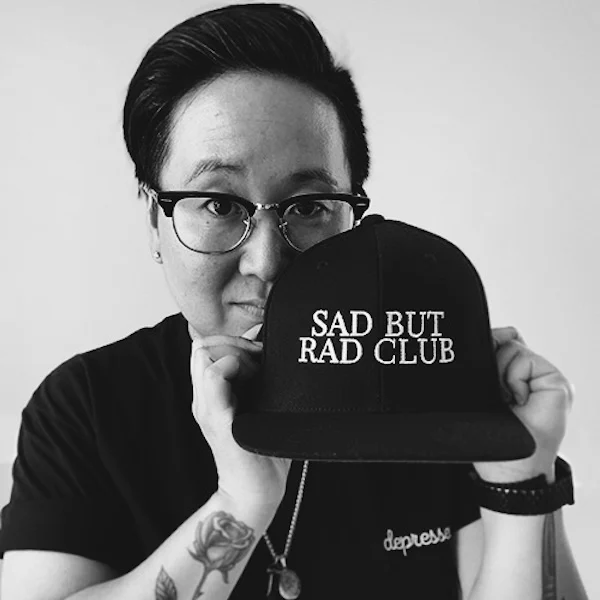
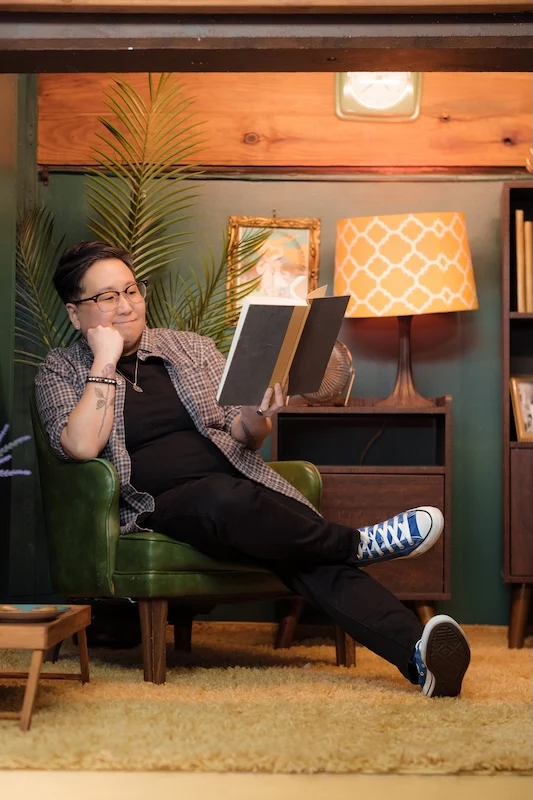
Kristel Penn, the founder of Sad But Rad Club, is a marketing executive, community advocate, speaker, and mental health educator whose work has spanned the adult industry, LGBTQ+ advocacy, and public education for more than a decade.
In addition, she serves as Grooby’s longtime Creative Director and Executive Producer of the Transgender Erotica Awards (TEAs) and is completing graduate training to become a marriage and family therapist with a focus on LGBTQ+, sex worker affirming, and marginalized communities.
Her work has been recognized with multiple XBIZ Industry Exec Award nominations, including Community Figure of the Year and Marketing Executive of the Year, and she received the inaugural XBIZ Honors Heart of Gold Award in 2026.
In this interview, we discuss the evolution of Sad But Rad Club, her philosophy on community building, and the experiences that have shaped both her personal and professional work.
Building Safe Spaces Through Authenticity
CD: Sad But Rad Club began initially as a response to grief processing. However, it has obviously evolved into something much broader. So what have you personally learned about the kinds of spaces that people are searching for when they congregate around vulnerability combined with humor and shared experience?
KP: I think that creating Sad But Rad Club has been such a learning experience for me because it does overlap with what I do for Grooby in terms of community building. However, there have been differences because with Sad But Rad Club, it’s just me. I’m responsible for just myself since I’m the top and I make all the decisions.
What I’ve learned is that, in order to cultivate a safe space, it happens in two ways.
One, I have to model the behavior that I am trying to encourage and empower people to do in our space. I have to model authenticity. I have to model vulnerability. I have to model active listening. I think that helps people feel safe in expressing those things for themselves as well. I think that having a space that encourages that kind of openness and validation is important.
I think the second piece, which is very important when it comes to cultivating online spaces, is that I have to step up and protect the space.
Something that comes up on social media is that every once in a while I’ll get trolling comments, and I will make examples of people through this content. I know that people have different views on how to handle trolls, but the reason why I directly respond to folks is that I want people to know and understand that I’m watching the space.
I’m not going to back down because even if someone says something homophobic or racist in response to my content, it doesn’t hurt my feelings. I’ve been in therapy long enough. I’ve been that awkward queer kid who was bullied for a very long time.
You really have to be creative with your insults to hurt me. But I’m aware other people can be watching my content and looking at these comments and feel some kind of way or insecure seeing somebody attack me.
So I feel like I have an extra responsibility to speak up, protect the space, delete comments, block folks, but also call people out. I think there are multiple things I need to do to show people that it is a safe space where somebody is actively participating in protecting it.
When Community Becomes Bigger Than You
CD: How has this feeling of responsibility evolved since inception?
KP: Sad But Rad Club was an accident.
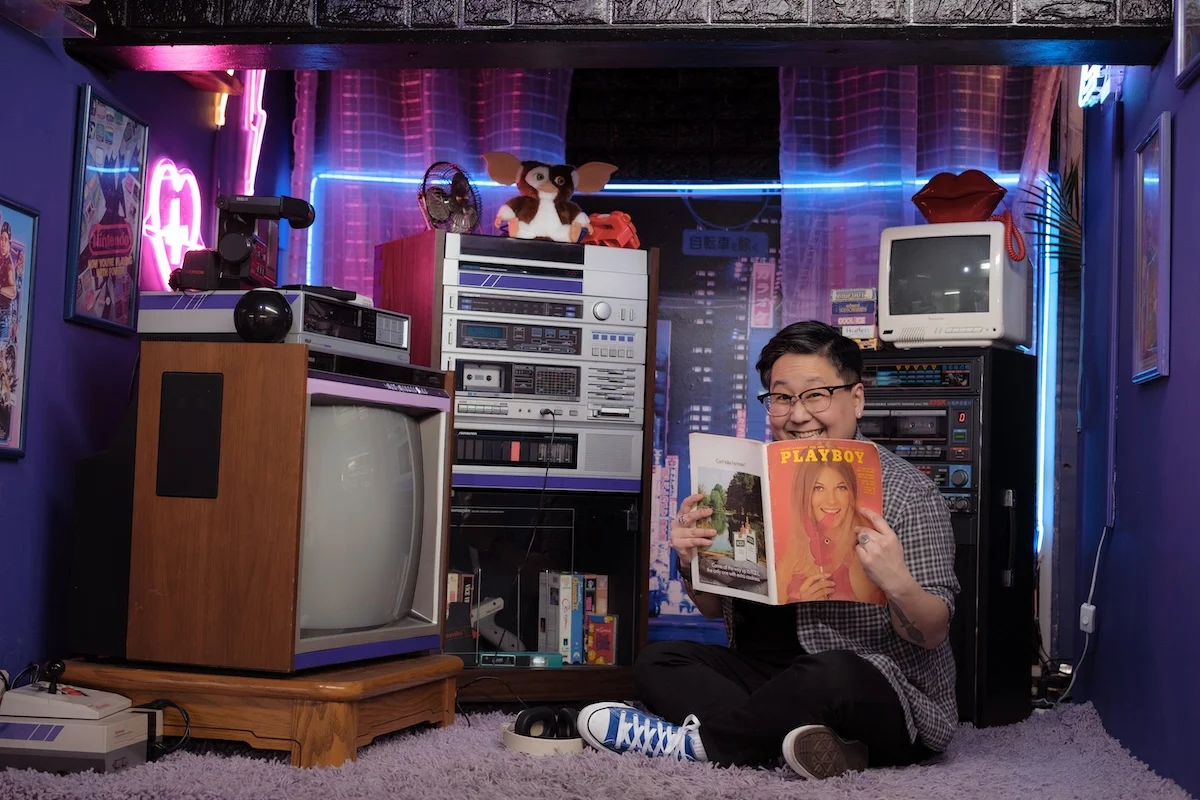
It started at the beginning of the pandemic. Originally, it was going to be behind the scenes content for Grooby that was just about my life as Kristel. But after I did a few mental health videos that were kind of making fun of my own therapy, and there was so much traffic, I pivoted to Sad But Rad Club.
From the beginning, I knew that I was not going to position myself as an expert. I was already in grad school by then. I knew I was going to become a therapist, and a lot of the mental health content that I saw was, “These are my therapist tips,” or positioning myself as an expert, and that did not resonate with me at all.
I knew that I was going to be the tool. When I saw that it resonated with people, when I saw that people really connected to my experiences, I felt like I had an extra responsibility to participate in, I guess, the cultivation of those relationships.
I think I was more hands off in the beginning. One, because I had fewer people engaging. But I think I’ve seen people become very invested in the content that I create and in their relationship to me, and also how they relate to me as a human.
So I’ve had to be very thoughtful in how I interact, thoughtful in what I post, and thoughtful in how I protect those who participate in this space.
CD: Right. Was there a moment where this sort of became like, “Oh, wait, this is different from what its initial concept was?” Or was it more of a “gradual, then sudden” realization?
KP: I think there was a turning point, and there’s been an escalation. I think it’s been in two places.
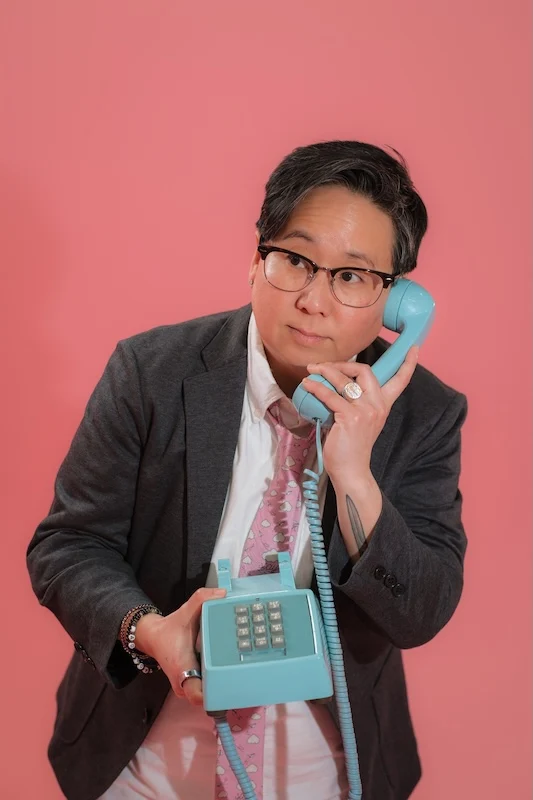
First, I started to get an increase in DMs from people. People would write long, very effusive messages to me, sharing their stories and sharing how they related to me. Receiving that on multiple platforms was a big deal, and I think it signified to me that perhaps there was something there to me telling these silly stories in my car. Making a video that takes me five minutes could resonate or ripple out much further than I had anticipated.
I think the other piece that ended up being kind of an “aha” moment for me was getting recognized in person. That part still feels very odd to me.
One time I was walking to my car in a Trader Joe’s parking lot, and someone stopped their car in the middle of the parking lot because they recognized me. They got out and came running over to introduce themselves. It’s very sweet. I’ve been recognized at restaurants, sports games, and on the street.
Earlier this year, I went home for a family emergency to help take care of my dad. We were having dinner at a nearby restaurant, and someone came up to introduce themselves to me and said they are a big fan. They also said, “Welcome home.”
It was so lovely. My dad was confused. He was like, “Do you know who that is?” My sister had to explain, “No, Kristel’s on social media.”
It’s such a lovely feeling to think that I have friends that I don’t know yet all over the place. It’s a very heartwarming thought, something I never thought possible as a little socially awkward kid from Hawaii who didn’t have that many friends.
What a wonderful thought to think that I could be out in the world and it’s a friend I just haven’t met yet.
Finding Your Voice by Being Yourself
CD: Right now, society feels very fragmented and combative, and to think there is this authentic commonality that connects us. It doesn’t have to be polished. It doesn’t have to be perfect. You can be beautiful and celebrated in your imperfections, or what you perceive as your imperfections.
KP: Yes. It’s so transformative for people because I think so many of us have been socialized growing up to believe that we have to be the most curated, socially powerful versions of ourselves to be accepted, to be included.
I think it’s really only been as an adult that I’ve realized I don’t actually want to be liked by everybody. Realizing that being my authentic self means that the right people will connect with me has been such a groundbreaking shift in my thinking.
Because I think being an outsider growing up, I always thought that the way for me to feel better about myself was if everyone liked me, if I could be what everybody wanted. But I realized it was not really about everybody else.
CD: Was there an age where you were suddenly like, “Oh, wait, that’s my voice,” and “This is me, and I’m okay with that?”
KP: I wish it came a lot sooner!
I got bullied a lot, and I spent all of high school, even through college, either getting bullied or feeling like my authentic self was not worth showing other people.
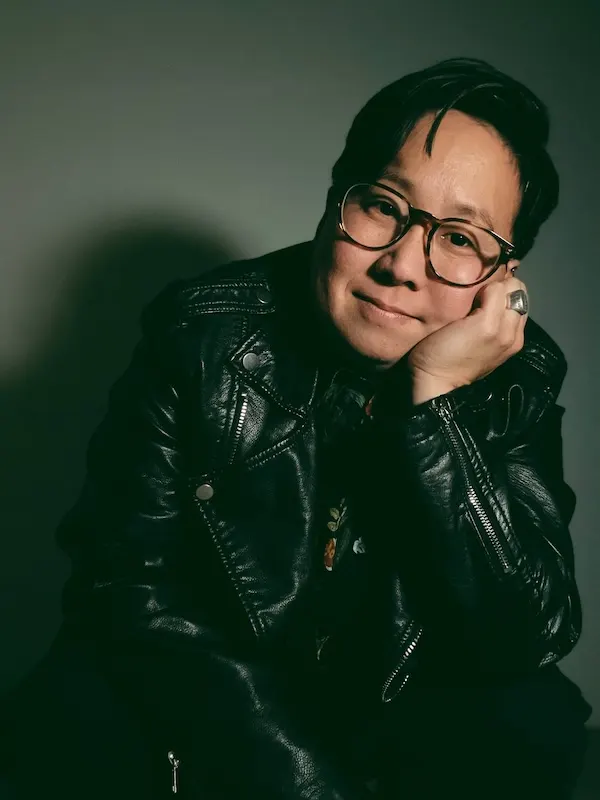
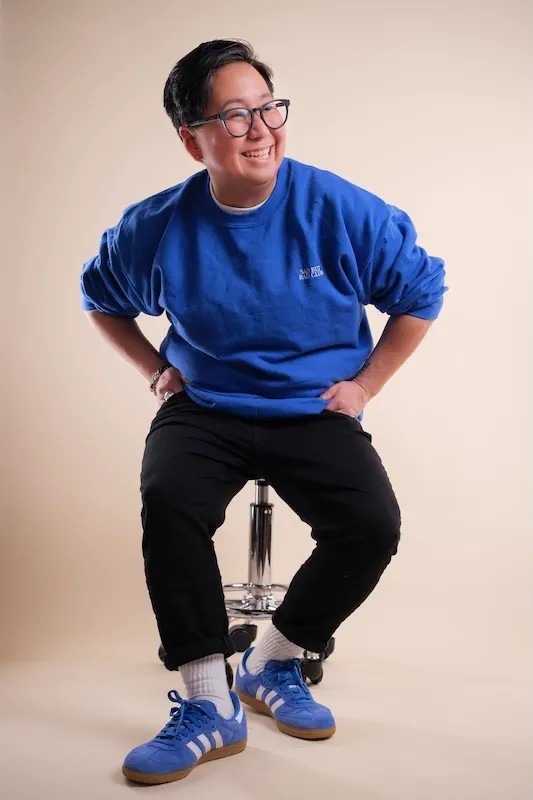
KP: When I moved to California, when Grooby relocated from Hawaii, I remember I did a video for Dan Savage’s It Gets Better project. I made it because I didn’t see anybody who reflected my identity at the time. I didn’t see any Asian American people. I didn’t see any masc-presenting Asian American women.
So I told my story, and I thought, “Well, maybe five people will watch it, and that’s fine,” and I kind of forgot about it. It ended up getting much more traffic than I anticipated.
It was really weird because it was the snowball to everything, even though I didn’t know it yet. I got contacted by media publications about my video, and my video was included in the book version of the It Gets Better project. At the time, there were only two news publications in Hawaii, and one of them interviewed me about my experience.
From that, I got asked to speak at the Japanese American National Museum. I did panels, and that started this realization where I was like, “Oh, people want to hear my story.” My story is not perfect, and I’m certainly not what I would have perceived as the hero of the story when I thought about what heroes looked like.
But I think it was my first semblance of, “Oh, my voice has value. Nobody is asking me to be anybody other than myself.”
When I did my first panel at the Japanese American National Museum, it was the first panel I’d ever done. They just wanted my lived experience because I talked about being a queer person in Hawaii, getting bullied, and things like that.
I remember asking the other panelists, “Who am I supposed to be?” They were all very seasoned members of the community. They were already doing a lot of advocacy work, and I felt like I was the only oddball.
They all very lovingly reminded me, “You’re here because we want you to be yourself, and we want you to share your story. That’s the only requirement here.”
That reminder was a real lightbulb moment.
I think since then, even though my path has not been super linear in terms of this journey, I’ve had pockets of those things happen in my career. Even through Grooby, as Kristel Penn, I’ve had places where I’ve been able to do community work the way that I want.
I’ve had moments where I’m like, “Oh no, this is my voice. I don’t have to dilute it. I can just say it how I want, and it will land however it’s going to.”
CD: I think there has been a shift, at least in the past few years, that could be described as gradual, then sudden. There’s been a shift away from those “perfect” expectations. Then perfection itself almost becomes alienating to people.
I think it also reiterates the idea that you can’t compare your insides to someone else’s outsides. I personally went through many years in junior high and high school being severely depressed, and everyone else thought I was perfectly fine because I projected this idea, whether subconsciously or consciously, that I had it all together.
KP: Self protection, right? It’s an integral survival tool, especially at that age.
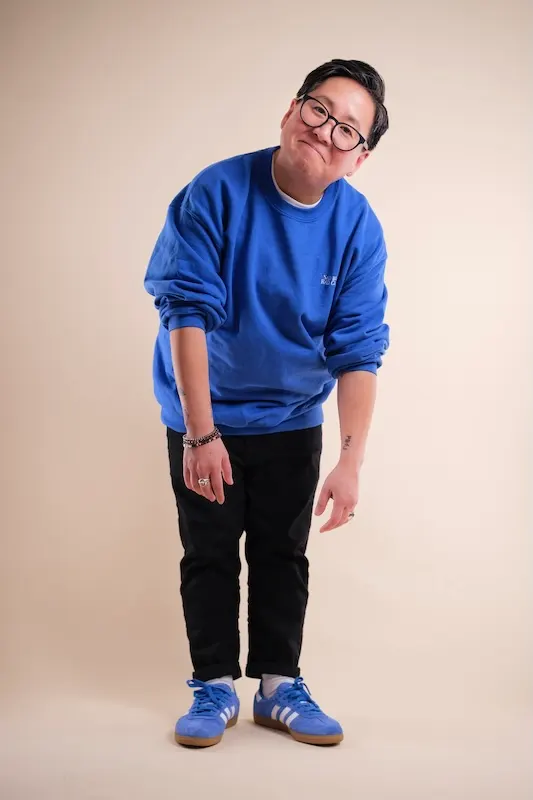
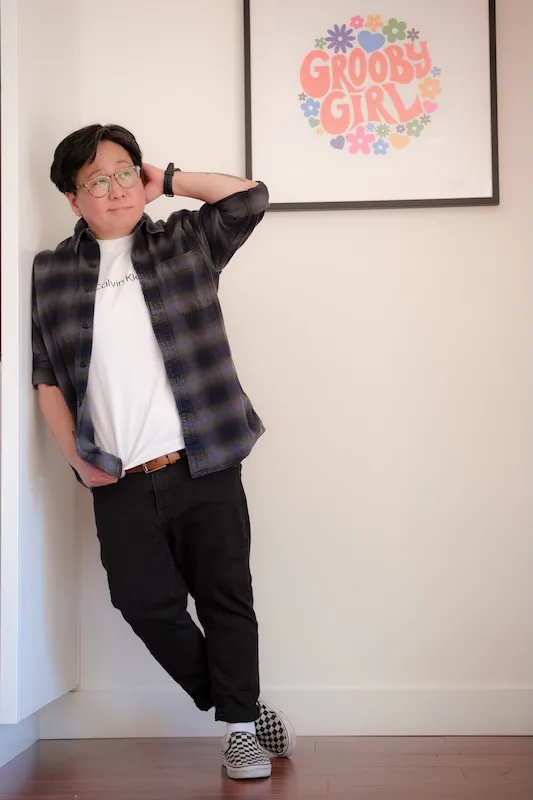
CD: Many communities begin because of the founder’s personal story, but eventually they take on a life of their own. You’ve created something that people feel belongs to them as much as it belongs to you and is part of your story.
While sometimes, like you said, it feels scary, or doubts creep in, or, like we’ve discussed in the past, the imposter syndrome component, you’re creating something where you’re sharing so generously of yourself. Yet it is resonating with thousands and thousands of people. People whom you’re not even necessarily aware of, but you can sense that there’s something there.
You’re speaking to something that now is a Club.
KP: I feel very honored by that.
I don’t really perceive myself as somebody who stands out. I have very wallflower energy, and that’s okay with me. I don’t think there’s anything wrong with that. So I think it feels so foreign, the fact that my message would resonate with people or that I would get attention anyway. It’s still kind of my younger self being a little bit confused.
CD: Well, also, it is kind of counterintuitive. The phenomenon of you feeling seen is actually making everyone else feel seen.
KP: I grew up as someone who felt like an outsider, who didn’t fit in, and got bullied all the way through high school. I would think, “When I get to college, I’m going to find my people.”
But that actually wasn’t the case. It probably wasn’t until I found myself in the adult industry. It was the first time somebody asked me my pronouns. I had no concept of that before, but that was the first time I felt truly seen.
Notes From Carly
Want to receive new blog posts by email? Join my mailing list.
Creating Spaces Where Everyone Belongs
CD: Your work also includes projects like Queer Prom and your creation of the Trans Erotica Awards, both of which celebrate communities that have often had to create their own cultural spaces.
How has working across those projects informed the way you think about visibility, celebration, and building community more broadly?
KP: For our community, the TEA Show is sometimes the first adult event they’ve ever been to. They haven’t done expos yet. They haven’t done AVN. So the pre-party is often their very first event because we do the pre-party and the Awards on Sunday.
We set up the red carpet with multiple media walls so everybody can walk. At other events, for a variety of reasons, it’s just not feasible to feature everyone. But at our pre-party, we have a media wall, and we invite everyone to take pictures. Anyone who wants to can interview with the red carpet host, Banksie.
We want people’s first experience of being in this space to feel welcoming.
I think the extra thing that I do, probably because I remember what it was like being the wallflower, not getting included or being purposely excluded, is that every year I look for folks who are sitting by themselves at the pre-party, and I’ll sit with them.
A lot of times it’s their first time attending, they’re by themselves, and so I’ll ask them, “Did you get your picture taken yet?” More often than not, they’ll say, “Oh no, I haven’t,” or “I’m too shy.”
I take every single person I sit with who hasn’t taken their picture yet or who is sitting by themselves, and I take them straight to the media wall. The photographers are so generous, and because they know it’s many people’s first time, they help people pose.
They’re so patient, and everybody takes that time to help these new performers feel comfortable because the space is small enough to give people individual attention. Then Banksie, who is so excited to meet people, so warm, and such a true ally, helps ease folks into what is often their first time ever being interviewed on a red carpet.
I feel very proud of the TEA Show pre-party specifically for that reason because I want people’s first reflection of this event to be one that is truly inclusive.
I feel like I have to do the extra labor to make it happen. It’s not enough to just host the event. It’s not enough to make the flyer and say it’s a safe space. I have to practice it, model it, and be an active participant in what that space looks like. So I go out of my way to make sure people get introduced to other people, people get their picture taken, and all that kind of stuff.
It’s my favorite part.
CD: That is about something bigger. I think that’s where we’re shifting as a society. We’re wanting that, and we’re demanding that.
KP: Yes. We feel like we deserve it finally, right? That it’s something we can ask for.
I think the parallel has been creating that in real time for the TEAs’ pre-party and now creating it in this digital space for Sad But Rad Club. If I model that behavior for what I want the online community to do, validate people, and encourage people to do the same, they do it for me.
As an example, I can’t read all the comments that come through, or if someone’s being crappy, I might not see it right away. But when I go into my comments, I’ll see strangers interacting with each other, validating each other’s feelings, encouraging one another, checking in.
If somebody leaves a comment saying they don’t feel good about themselves or that they don’t matter, I’ll always see other people responding with, “You matter to me,” or checking in with them.
It’s lovely to see how the community also runs itself because they all believe in the same idea of cultivating a safe space. A safe space is not just my responsibility or my onus. Everybody feels like it’s part of what they want to do. I think that’s beautiful. I think the pre-party is kind of the same thing. Everybody buys in.
Why Celebrating Community Can't Wait
CD: How does working on, let’s say, Queer Prom serve as the incarnation of that?
KP: I’ve been sitting on the idea for Queer Prom for years, and because it’s a community event and not a moneymaker, it’s a harder sell overall.
I kept thinking, “How can I justify this event? How can I get the money from sponsors?” I had this light bulb moment a few years ago. Foxxy and I were hanging out, and there was a TikTok filter at the time that made you look like your teenage self.
We had this lovely moment talking about what it would have been like to be our authentic selves at prom because we didn’t get the opportunity to do that. We daydreamed about what it would look like if we got to go to prom as our authentic selves, and in that moment we realized we should just do it. No one’s going to do it for us.
So I pitched it to Steven at Grooby and to the Avalon, who very, very generously made our costs for hosting the event as low as they could because they wanted to buy into the community. That’s what helped make it possible that first year because it was a small event.
I was so surprised by how much people enjoyed it. I really hope that continues because, selfishly, I want to do things just because they feel good and because people enjoy them.
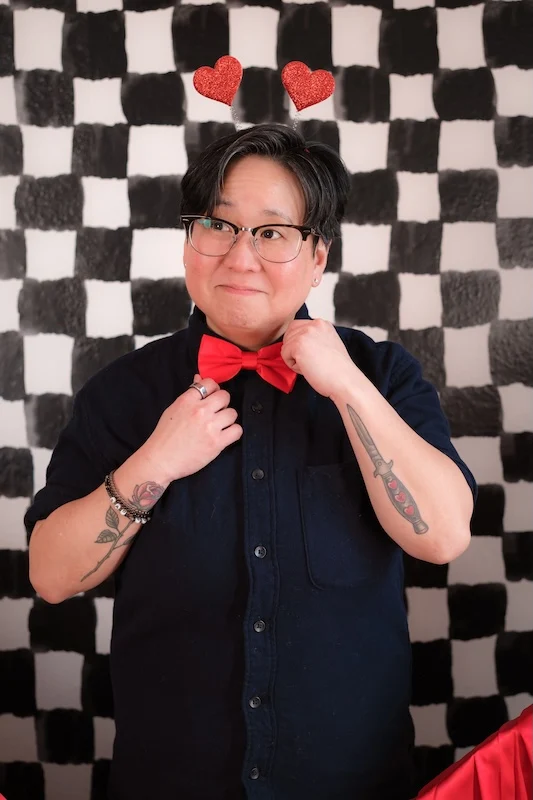
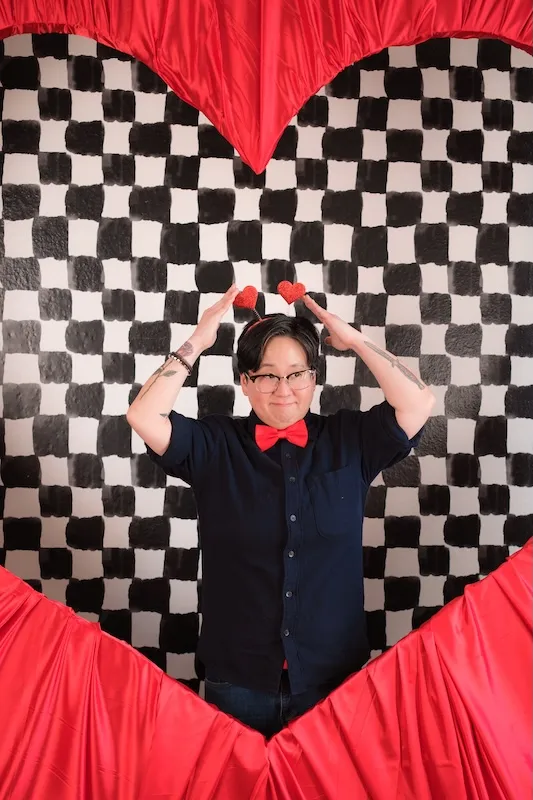
I’m just all heart. I want to do all the heart things.
CD: I think one of the common threads throughout this conversation is the sense of celebration of self.
KP: We’ve fought so long and so hard, and I don’t want to wait for somebody else to celebrate our communities.
If I wait for someone else to do it, someone who I think can do it better or bigger, it’s never going to happen. So I just want to do it already, in whatever form it looks like. Because I want it to be perfect, I want it to be a certain way, and I know that about myself. If I get stuck in that too long, I won’t do it at all. So I’m really trying to push against that inclination.
CD: I love it.
Looking beyond any single event or organization or movement, what conversations do you hope are more common over the next decade? About community building, about mental health, and about the role that any person can play in creating a space where others feel seen and feel seen themselves.
KP: I want to see more conversations that really touch upon and honor intersectionality. I think things are still happening in silos. I think people believe everything needs to be aligned in order for change to happen.
CD: Everything has to be all adult or all LGBTQ+ or all Asian American…
KP: Yes. I understand the utility of trying to make the messaging as simple as possible or as strong as possible, but we are not single identity people. Any of us.
So I would like to see spaces become more inclusive and hold the complexities of our intersectionality. Every single person has a part to play when it comes to change.
There’s no follower size requirement or time requirement in order to create change of this magnitude on an institutional or structural level. It involves all of us using our skills, our experiences, and our unique identities to move things in a better direction.
CD: What I love about these interviews and straddling so many communities with my work is that I’ve learned so much about people. I wouldn’t get such varied lived experiences if I stayed in a silo.
KP: I want there to be more bridging. I really do. Because I feel like we need more of that in order to make the change that we’re all really trying to make in our society. There needs to be more bridging.
CD: I think as a society we’re slowly becoming more willing to listen and to respect. Not across the board. It’s still happening in small increments. But I do think there’s gradually becoming more social acceptance that we can have differing opinions, thoughts, and beliefs without denying that the other person is entitled to theirs.
KP: I think I have seen the needle move in that direction. Slowly, and not perfectly, but change is not perfect. I think we have to be open to the ways the message can be delivered. There are so many vehicles for change and so many vehicles for that messaging.
Just as an example, SBRC is not a sex work account, but the topic of sex work and having sex workers on the account comes up often. Every once in a while, when I get a new influx of followers, I like to remind people that my spicy friends are sometimes here, and these are my beliefs about them.
To expose an audience to a demographic they might not otherwise interact with, and to help give those communities a voice and more depth and three dimensionality, can really help those conversations.
People might have views about sex work but have never actually met a sex worker. Now they’re seeing all these sex workers doing wholesome things.
It’s really about bridging. How can we help humanize others? How can we cultivate empathy?
Leading With Heart
KP: As an aside, your questions. When you sent them to me, I sat with them all day. I sat with them again last night. I sat with them this morning.
They were so thoughtful, and I could tell how much care you put into the language and what you asked. I felt seen in a three dimensional way. I cannot tell you how thankful I am.
I know we know each other, but I know that you must have gone the extra mile to see me, and to see me in a way that was truly nuanced and three dimensional. I just have to tell you how grateful I am for that. You were not obligated to do all of that labor.
You could have asked me any questions, and they would have been lovely and thoughtful and smart, but you really went above and beyond. What you asked will really sit with me for a long time. I just wanted to make sure that you knew that.
CD: Thank you, that really means a lot. That is the gift you are giving to me.
KP: Such good, heart filled questions.
CD: I always try to align with the individual, and you are heart forward. I think it is indicative of everything you’ve put out into the world.
KP: Well, that’s very kind. I see you.
CD: I see YOU.
KP: This is half an aside, but to be a woman in our industry, to be a person of color in our industry, to play the game, to be an active participant in the game, to be a changemaker, I think there is an expectation that we do things in a very specific way that does not always align with who we are.
I have always been of the belief, and I really respect this about you, that I’m going to be authentic to myself whether or not that’s good for business. I’m always going to be that way. I’m always going to be generous with my information. I’m always going to be transparent. I’m always going to be community forward.
That might not translate into dollars and cents, but that is the way I would like to be congruent. I really respect that about you, in what you do and how you move through the world. It is very clear.
And I respect that not everyone can do that. It might be scary, or they might not have the ability or privilege to do so. There are all kinds of things that impact that accessibility. I’m aware that my privilege has afforded me certain opportunities and protection in our industry, so I make sure I leverage that as much as possible to uplift and support the performers I work with.
I imagine it is not always easy for you, but I respect that you do it. I see that. I see you. It does not go unnoticed.
CD: Thank you. Like you said, it’s not easy. It’s not. But it is a very high compliment coming from someone like yourself, especially.
KP: It encourages me. It reminds me to continue practicing at that level too. It’s a good reminder.
CD: The mutual aspirations are there.
KP: I just want to say thanks for this experience.
It is so nice to think about my brand in this way because I don’t get a chance to verbalize those things that I’m holding about what it means to me and what it looks like. The brand is meant to look very casual, but a lot of thought goes into it, how I do it, and how I approach my messaging.
Your questions reflected and honored the labor that I do that doesn’t get seen, as you were saying, the invisible labor around it. So I really do appreciate that. The big heart aside.
CD: Heart, heart.
Join the Sad But Rad Club on it’s official website.
Learn more about Kristel’s other work at Grooby.com and QueerProm.com.
Follow her on IG and Tik Tok: @sadbutradclubxo.